In the age of digital transformation, performance bottlenecks in networking infrastructure can make or break the success of an application—especially in environments like high-performance computing (HPC), artificial intelligence (AI), and large-scale analytics. This is where InfiniBand networking steps in, offering unparalleled speed, efficiency, and scalability.
From powering supercomputers to accelerating cloud platforms, InfiniBand has emerged as a leading interconnect technology. But how does it really compare to traditional options like ethernet or Fiber Channel? What makes it uniquely suited for data-intensive applications? This guide will answer those questions and more, covering everything from how InfiniBand works to its benefits, differences from ethernet, and practical considerations for deployment.
What is InfiniBand?
InfiniBand is a high-performance, low-latency interconnect standard designed for mission-critical computing environments. Originally developed for data center and HPC use, InfiniBand has evolved into a robust solution for server-to-server and server-to-storage communications. It enables devices to communicate over a switched fabric using hardware-driven protocols and minimal CPU overhead.
The protocol supports advanced features like Remote Direct Memory Access (RDMA), which allows one machine to access the memory of another without involving the operating system or processor. This leads to significantly faster data transfers and more efficient use of computing resources. InfiniBand is frequently used in applications where speed, reliability, and scalability are critical—such as genomics, financial modeling, and real-time machine learning.
How Does InfiniBand Work?
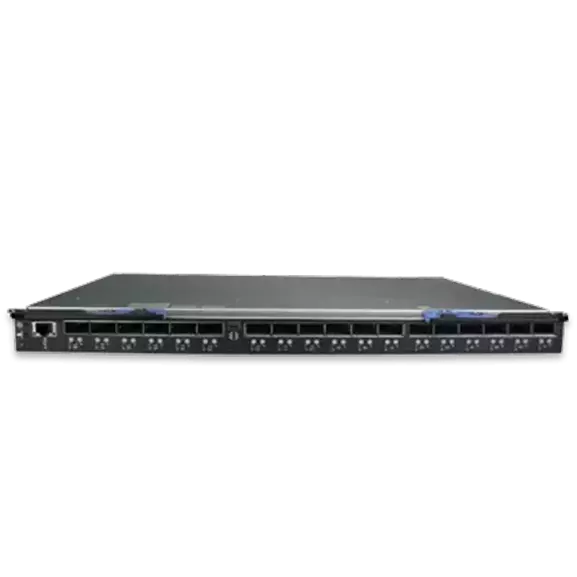
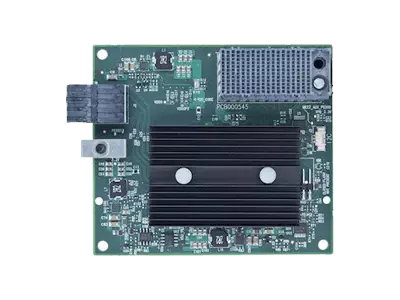
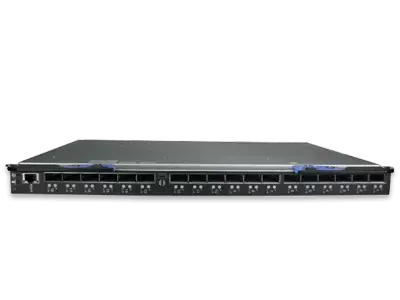
InfiniBand operates over a fabric-based network consisting of Host Channel Adapters (HCAs), InfiniBand switches, and copper or fiber optic cabling. The network is controlled by a subnet manager that configures paths and manages traffic flows. Each node in an InfiniBand network connects via an HCA, which handles all data transactions with minimal latency.
One of InfiniBand’s defining features is RDMA, which allows data to be transferred directly between application memory spaces across nodes. This bypasses the CPU and OS, cutting down on latency and system load. Furthermore, InfiniBand supports Quality of Service (QoS), adaptive routing, and congestion control—making it not just fast, but highly efficient and stable under heavy workloads.
Benefits of InfiniBand Network
InfiniBand stands out as a preferred networking solution for environments where speed, reliability, and efficiency are paramount. Its advanced architecture supports ultra-fast data transfer with minimal latency, making it ideal for HPC and AI workloads. Unlike traditional networks, InfiniBand offers consistent performance under pressure. Below are the key benefits that make InfiniBand a superior choice for high-performance networking:
- Fast and efficient
- Low-latency communication for HPC
- High bandwidth
- Reliable data transfer
- Scalability and flexibility
- Security and data protection
Let's look at these more deeply:
Fast and Efficient
With transmission rates reaching up to 400 Gbps using modern InfiniBand switches, this technology is designed for high throughput environments. It reduces I/O bottlenecks, enhances job completion times, and ensures seamless data flow, even across thousands of servers. Efficiency is further boosted through hardware offloading and intelligent data routing.
Low-Latency Communication for HPC
In scientific simulations and AI workloads, every microsecond counts. InfiniBand minimizes communication delays through its RDMA feature and zero-copy transfers. Sub-microsecond latencies allow massive computer clusters to function more cohesively, resulting in better parallelism and faster time-to-solution for complex problems.
High Bandwidth
InfiniBand delivers superior aggregate bandwidth using scalable lane configurations (e.g., x4, x8, x16). As datasets grow, so does the need for network capacity—and InfiniBand meets this challenge head-on.High-bandwidth networking ensures that no part of the compute pipeline is ever waiting on data.
/glossary/bandwidth/
Reliable Data Transfer
Built-in support for error checking, message ordering, and flow control ensures that InfiniBand networks offer not just speed, but also rock-solid reliability. These features are handled at the hardware level, unlike ethernet, which often relies on software for similar tasks. This results in more consistent performance and fewer dropped packets.
Scalability and Flexibility
InfiniBand is engineered to scale effortlessly—from small server clusters to the world’s largest supercomputers. The architecture supports hierarchical and mesh topologies, multi-tier switch deployments, and automatic path optimization. As your infrastructure grows, InfiniBand adapts without losing performance.
Security and Data Protection
InfiniBand includes support for partitioning and QoS enforcement, which isolates traffic and prevents interference. Advanced implementations also feature encryption and secure key exchanges, making InfiniBand a safe choice for enterprise and academic workloads that require both speed and data protection.
InfiniBand vs ethernet: What’s the Difference?
When evaluating InfiniBand vs ethernet, it's important to understand their distinct purposes and performance profiles. Ethernet is widely used for general IT networking due to its affordability, ease of deployment, and broad compatibility. In contrast, InfiniBand is engineered for high-performance environments that demand low latency, high throughput, and efficient data processing—ideal for HPC, AI, and scientific computing. Refer to the table below for a side-by-side comparison of their key differences.
| Aspect |
ethernet |
InfiniBand |
| Purpose |
General-purpose, widely adopted for everyday business networking |
Designed for high-performance, low-latency environments like HPC and AI |
| Adoption |
Ubiquitous, used in nearly every IT environment |
Specialized use in supercomputers, data centers, and scientific computing |
| Ease of Use |
Easy to set up, manage, and integrate with existing systems |
Requires specific hardware and expertise for optimal deployment |
| Cost |
Cost-effective with a wide range of standard hardware options |
Higher initial cost but greater long-term ROI for demanding workloads |
| Compatibility |
Compatible with nearly all commercial and consumer devices |
Requires InfiniBand-compatible HCAs, switches, and cables |
| Latency |
Higher latency due to software-based routing and CPU involvement |
Ultra-low latency enabled by RDMA and hardware offload |
| Throughput |
Lower throughput compared to InfiniBand |
Higher throughput with speeds up to 400 Gbps and beyond |
| CPU Efficiency |
Greater CPU overhead due to traditional data handling |
Efficient CPU usage via RDMA, freeing resources for computation |
| Network Architecture |
Hierarchical, shared-medium networks prone to congestion |
Fabric-based topology with adaptive routing and low congestion |
| Best Use Cases |
Office networks, file sharing, internet access |
HPC, AI model training, real-time simulations, and data-intensive computing |
Staying ahead with InfiniBand
In the era of big data, AI, and real-time computing, network performance is no longer a luxury—it’s a necessity. InfiniBand networking has proven itself as a critical technology for environments where every microsecond counts. Whether you’re running a research supercomputer, a cloud-based AI training system, or a next-generation data center, InfiniBand delivers the performance, reliability, and scalability to support your most ambitious workloads.
As the demand for faster, smarter, and more efficient systems continues to rise, investing in InfiniBand isn't just about keeping up—it’s about staying ahead.
FAQs
What are the advantages of using InfiniBand over ethernet?
InfiniBand provides ultra-low latency, high throughput, and efficient CPU offloading that ethernet simply cannot match. It excels in high-performance environments like AI and HPC, where timing and data transfer speed are critical. ethernet is better for general use, but InfiniBand is optimized for peak performance.
What is the difference between InfiniBand and Fiber Channel?
Fiber Channel is primarily used for SAN (Storage Area Network) environments, offering stable high-speed storage connectivity. InfiniBand, on the other hand, supports both compute and storage networking with greater flexibility and lower latency. While Fiber Channel is storage-focused, InfiniBand provides broader application-level benefits.