

Tape Storage
Cost-effective data protection & archive solutions
Tape technology is one of the most energy-efficient, secure, and portable long-term data storage solutions available. Lenovo offers a wide selection of tape storage products to meet your needs.
Frequently Asked Questions on Tape Storage
Lenovo's Tape Storage Solutions: Taking Legacy to Legendary
In the fast-moving arena of data storage, it’s easy to overlook technologies that have quietly been the bedrock of information preservation for decades. Tape storage, once the stalwart of data backup, is enjoying a renaissance.
And for good reason. In an age where "big data" is the buzzword, tape storage systems offer unparalleled capacity and cost-effectiveness. Enter Lenovo, a powerhouse in technology innovation, offering evolved tape storage solutions that excel in performance and reliability.
The Ageless Reliability of Tape Storage
Tape Storage Drives may not enjoy the limelight of the more 'fashionable' cloud storage or SSDs, but what they lack in terms of the limelight, they more than make up for in resilience, longevity, and sheer data capacity.
They form the backbone of many enterprises' backup and archival strategies, allowing organizations to store enormous volumes of unstructured data in a secure, cost-effective manner.
How Does a Tape Drive Work?
At its core, a tape drive is a data storage device that reads and writes data on a magnetic tape. It typically resembles a traditional cassette player, though recent advancements have seen more compact and robust iterations.
The mechanism is elegantly simple - upon receiving commands from a server or backup software, the tape drive positions its read/write head to the required point on the tape and transfers data using magnetism.
Uses of a Tape Drive in Storage
The applications for a tape drive today are as varied as they are vast. In the enterprise, tape drives are still widely employed for long-term data storage, often for backups that may never be read—a critical function in disaster recovery. Additionally, sectors such as healthcare, finance, and government, which demand stringent data retention policies, rely on tape storage for secure archival.
Types of Tape Drives
Lenovo offers a range of tape drives, each with specific features tailored to various enterprise needs. They span across small to large businesses, and the differences mainly lie in storage capacity, transfer speed, and compatibility with different generations of tape media.
Linear Tape-Open (LTO): One of the most prevalent tape technologies, LTO, represents the fruits of a collaboration between tech giants IBM, Hewlett-Packard, and Seagate. LTO drives offer significant capacity and have a roadmap of generations that ensures backward compatibility and scalability.
Digital Linear Tape (DLT): While not as widely used as LTO, DLT is the preferred choice for some businesses, particularly those that began using it before the introduction of LTO. DLT drives offer backwards compatibility among various generations, and DLT tapes generally do not allow WORM (Write Once Read Many) but LTO WORM tapes do.
Advanced Intelligent Tape (AIT): Evolving from the DDS (Digital Data Storage) format, AIT drives, along with its magnetic resistance heads, help provide high recording density and reduced magnetic interference for greater capacity and reliability.
Strengths and Limitations of Tape Drives
Despite the advantages, tape drives are not without their constraints. While they excel in raw storage capacity, their speed in retrieving information is not as swift as disk-based systems, such as hard drives or SSDs. This makes them slower to respond to 'hot' data that needs to be accessed frequently.
Difference Between Tape Storage and Disk Storage
Tape and disk storage cater to different needs in information technology. Disk storage, characterized by Hard Disk Drives (HDDs) and Solid-State Drives (SSDs), provides fast access to data and is used for transactional applications and current data. On the other hand, tape storage is economical and provides sequential access of data, making it ideal for backups, archiving, and disaster recovery.
Tape Storage Solutions at Lenovo
Known for their commitment to scaling secure storage, Lenovo offers an array of tape storage products aimed at diverse operational landscapes. From small businesses seeking a cost-effective approach to data storage to large enterprises with massive data archives, Lenovo's tape solutions scale impeccably and are built to handle the rigors of industrial use.
The Evolution of IBM Tape Drives
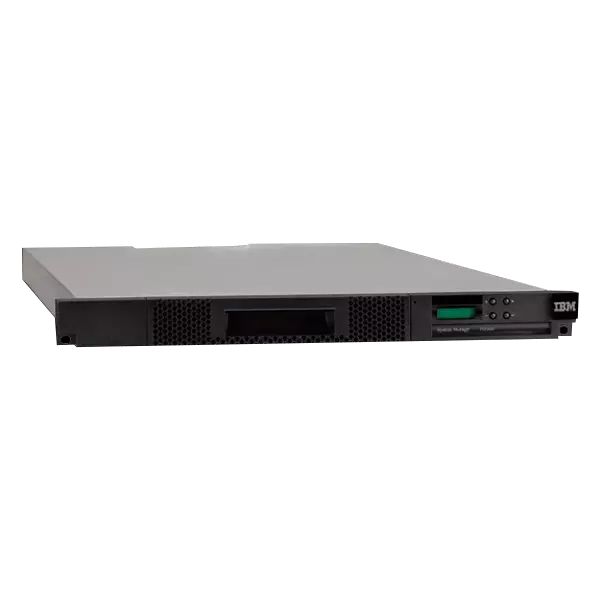
Lenovo houses a rich lineage of IBM tape drives, carrying forward the legacy and innovation that the brand stands for. The IBM TS2290 Tape Drive, for instance, is a workhorse in enterprise backup, with its high-speed data transfer capabilities. The IBM TS2900 Tape Autoloader, on the other hand, is a compact solution perfect for businesses requiring automation in their backup processes.
Lenovo LTO Technology
The Lenovo LTO technology, such as the IBM TS2280 Tape Drive, isn't just for data storage — it's a part of a comprehensive data management strategy. This robust system provides WORM capabilities, ideal for regulatory compliance, and can efficiently manage data across its entire lifecycle.
Scalability with IBM Tape Libraries
For large-scale archival and complex data management, the IBM TS4300 Tape Library offers full scalability, capable of accommodating multiple generations of LTO tape drives, future-proofing the investment.
Why Is Tape Storage Still Relevant and Some Would Say, Revolutionary?
Tape drives and the storage solutions they power may seem antiquated compared to newer technologies, but they have distinct advantages that are increasingly hard to ignore in the sprawling data landscape. The longevity and cost-per-terabyte benefits of tape storage make it an ideal companion for businesses looking to store and secure vast oceans of data.
- On Cost and Scalability: Where tape truly shines is in its cost-effectiveness at a large scale. With data production growing exponentially, businesses face the unenviable task of not only storing this data but also of implementing durable, affordable storage solutions. Tape storage offers the lowest cost per gigabyte of any storage medium.
- Environmental Benefits: In an age where sustainability is no longer just a catchphrase, the power efficiency of tape storage is a welcomed attribute. Compared to constantly spinning disks and energy-consuming compute servers, tape systems offer a 'green' alternative to the always-on data strategies of the modern business world.
- The Edge in Security: While cloud and online storage have their place, tape storage remains a preferred option for ultra-secure, offsite data backup. With the rise in cyber threats, many businesses are reverting to tape as a 'final failsafe' for their most sensitive data, beyond the reach of digital adversaries.
- Compliance and Longevity: Industry regulations often mandate the retention of data for extended periods. Tape, with its WORM and cryptographic capabilities, ensures data integrity under strict compliance standards. Additionally, tape storage media have physical longevity that far exceeds that of disks and optical media, which can degrade over time.
Looking to the Future with Lenovo Tape Solutions
Tape storage may sound as exciting as watching paint dry, but the truth is, it’s a dynamic technology sector with an exciting roadmap. Lenovo, with its tape storage solutions, is at the forefront of this evolution, ensuring that businesses have the robust, reliable tools they need to tackle the challenges of data management.
- Investing in Innovation: Lenovo's approach to tape storage isn't one of maintaining the status quo but of continual innovation. Newer iterations promise even higher capacities, faster transfer speeds, and more durable media, ensuring that tape remains a viable and competitive option in the data storage array.
- The Tape of Tomorrow: Analysts predict a promising future for the tape storage industry. With the advent of technologies like LTFS (Linear Tape File System) and tape’s pivotal role in the hyperscale data centers, tape systems are set to become even more integral to storage ecosystems.
- A Partner for Data-Driven Success: In a world where being data-driven is a prerequisite for success, Lenovo's tape storage systems stand ready to be the silent guardians of invaluable information. These systems provide a potent combination of cutting-edge technology and time-tested reliability.
- Legacy that is Legendary: Tape storage and the tape drives that power them may not be the most glamorous of the storage media. But when you make great technology – sometimes legacy becomes legendary! Lenovo's foray into tape technology cements their reputation as not just a hardware company, but as a true partner in data evolution. With a legacy of trust and an eye on the future, Lenovo's tape storage solutions are an investment in the past, present, and future of data management.