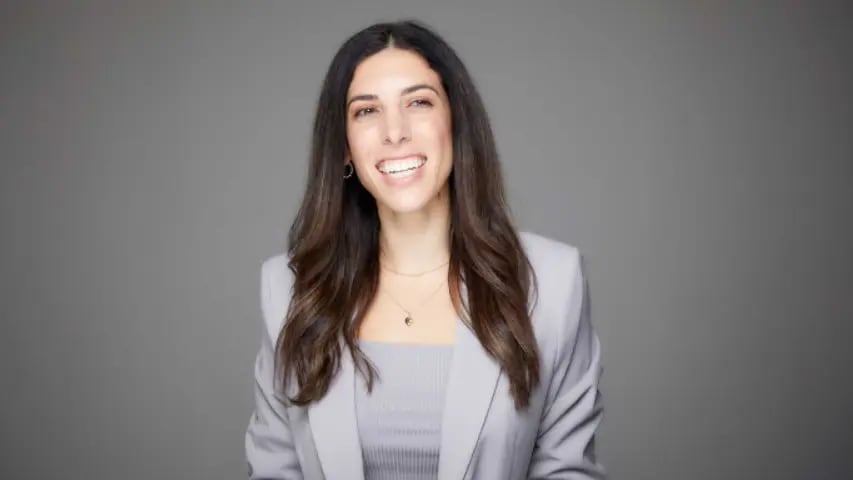
Alexa Carlin (00:00:27:07 - 00:01:06:23):
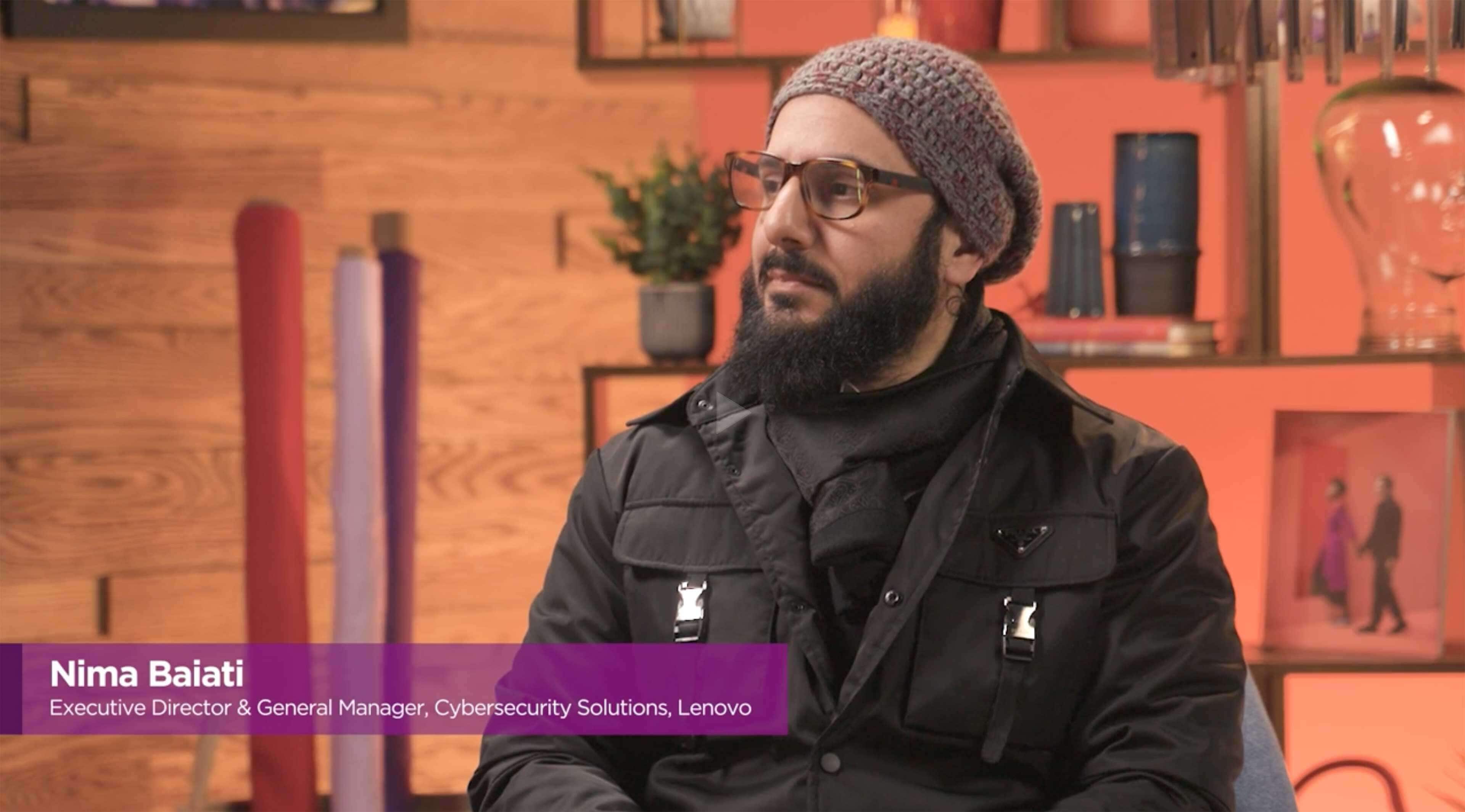
Hello and welcome to accelerating your AI journey. I'm your host, Alexa Karlin. Today we're talking about the power of AI to provide businesses with predictive insights and real time monitoring that help identify and address risks before they escalate. With me is Nima Bayat, executive director and GM, Commercial Cybersecurity Solutions at Lenovo. He'll help us understand how you can strengthen your risk management strategies with AI, improving resilience and reducing your exposure to vulnerabilities you may not be aware of.
Alexa Carlin (00:01:07:01 - 00:01:07:19):
Welcome, Nima.
Nima Bayat (00:01:07:23 - 00:01:09:17):
Thank you. Alexa, it's a pleasure to be with you.
Alexa Carlin (00:01:09:19 - 00:01:17:22):
Thanks so much for being here. So, tell us a little bit about yourself and what inspires you to work with technologically driven companies?
Nima Bayat (00:01:17:23 - 00:01:41:01):
Yeah, absolutely. So I run Lenovo's Cybersecurity Solutions business, and our mission every day that we get up is to find solutions to help our customers address our cyber security challenges, whether that's around privacy, whether it's around securing their data, how to operate in this new world of AI and organizations, and that in and of itself is inspiring, right?
Nima Bayat (00:01:41:01 - 00:01:50:02):
We get to work with really cutting-edge technology, working on real world problems to help secure organizations and helping them achieve their objectives.
Alexa Carlin (00:01:50:04 - 00:02:11:14):
Definitely. So, let's jump in and talk about how AI is completely changing the landscape. So, we're seeing massive acceleration and democratization of the use of AI. What are some of the ramifications, of the way businesses approach risks and security and privacy.
Nima Bayat (00:02:11:16 - 00:02:30:10):
Yeah. So, I think it's you know, you talked about democratization. And I think that that's a huge thing that's happened over the last, really 18 months. I think it's important, though, for a moment to step back and recognize that AI is not something that was introduced to the world with ChatGPT. It's something that's been around for 60 years.
Nima Bayat (00:02:30:10 - 00:02:52:20):
In fact, if you go back and you look at some of the first research papers on the topic of machine learning and artificial intelligence, you can go back to the 40s. What really is the 40s? Yeah, yeah. So, it's something that computer scientists and technologists have kind of always been in the pursuit of. What happened, though, is directly on the point of the democratization of it.
Nima Bayat (00:02:52:22 - 00:03:20:08):
When you introduce this concept of large language learning models and making the interaction with AI the usage of AI something that somebody who doesn't have any programing experience can use that has significant ramifications, both for organizations in terms of their businesses, in terms of their business models, how and where they operate. But from a security standpoint, it has very significant ramifications.
Nima Bayat (00:03:20:10 - 00:03:47:00):
You're lowering the bar on one hand of the skill set that attackers need. Right. Used to be 20 years ago UX to actually have a pretty solid grasp on programing and how systems work today with tools like AI and generative AI. That bar comes down really low where, you know, a layman can potentially cause some damage if they put their minds to it.
Alexa Carlin (00:03:47:02 - 00:03:53:11):
It's crazy, the tools out there where you could just say what you want to build and see it be built right in front of you.
Nima Bayat (00:03:53:13 - 00:03:54:05):
Yeah.
Alexa Carlin (00:03:54:07 - 00:03:59:14):
I don't even think about the sense of hackers now can use that tool for the negative.
Nima Bayat (00:03:59:16 - 00:04:15:04):
No, absolutely. I mean I'll give you a give you an example, right? A couple nights ago, I was playing around with some of the new AI tools that are out. Right. Because there's a host of them that have entered the marketplace. But even creating like your own mobile application was a normal, easy kind of normal in air quotes.
Nima Bayat (00:04:15:04 - 00:04:25:04):
Somebody who doesn't have a programing background can sit down with a couple of these AI tools and get to a minimum viable product for an application in.
Alexa Carlin (00:04:25:04 - 00:04:25:19):
No time and.
Nima Bayat (00:04:25:19 - 00:04:49:06):
No time, right. And so, it really streamlined that process. And when you look at it from a security standpoint, you get into obviously the threat aspect and the privacy considerations, but it also gives the good guys a lot of really compelling tools in their toolbox to be able to help combat the threat landscape and things like predictive analytics and intelligence.
Alexa Carlin (00:04:49:08 - 00:05:14:15):
So, talking about that, the predictive insights and real time monitoring AI brings to risk management make it uniquely equipped to address challenges and vulnerabilities that really, even just recently, it would be really hard to do that. And so, what are some of those types of risks and how can IT leaders prioritize them and use AI to tackle them?
Nima Bayat (00:05:14:17 - 00:05:40:21):
Yeah. So, like the $6 million question. Right. Because it's what are where do you kind of focus on from a security standpoint? I'd say one of the critical places where AI two organizations can leverage AI today is around the understanding of what risks are coming into their organizations and getting those insights. So, for example, within our portfolio, we have a solution that we've partnered with Sentinel one on for extended detection and response.
Nima Bayat (00:05:40:23 - 00:06:09:12):
Now when you take this solution and you layered on top of something like an AMD Ryzen chip, you get a tremendous amount of insight into what's going on across your organization that couldn't be picked up by the normal human AI, right? Because you're having that machine learning engine that those AI engines in the background picking up disparate data points and stringing together a contextual story for then the human being to say, is this something that I want to go investigate?
Nima Bayat (00:06:09:12 - 00:06:26:01):
Is it worth investigating? Is this a threat, or is this a fourth of a false alert that I can kind of set to the side? And that really helps organizations with one improving their security posture, but to also efficiencies and being able to deploy their human capital in the right places.
Alexa Carlin (00:06:26:05 - 00:06:29:08):
So, it's working alongside the team. You have.
Nima Bayat (00:06:29:10 - 00:06:31:02):
Absolutely. Yeah.
Alexa Carlin (00:06:31:04 - 00:06:33:07):
To detect it quicker, faster.
Nima Bayat (00:06:33:07 - 00:06:47:17):
Augmenting the team that you have. And then for those organizations who, you know, may not have the, the numbers of people and the skill set in their organization being able to fill some of those gaps, definitely.
Alexa Carlin (00:06:47:17 - 00:07:04:02):
So, getting out in front of this and integrating AI into risk management strategies can be disrupting to existing systems and teams. What advice do you have for our viewers on change management strategies?
Nima Bayat (00:07:04:03 - 00:07:31:00):
Yeah. So, change management is a big when we were talking about anything it related, and especially more so when you're talking about introducing new system systems that the organization may not have used in the past or in have necessarily the subject matter expertise. So, the first is working with trusted partners, but also and I think even more importantly than that is what I always like to say is you need to start with the problem statement.
Nima Bayat (00:07:31:01 - 00:07:54:14):
What are you trying to solve for? Right. What is the either the business objective that you're trying to achieve or what challenges organizationally are you trying to solve? And then that helps you frame where you're going. And then once you have those strung together, then you can build a change management program around that, making sure that you're also getting the necessary buy in of all the key stakeholders.
Alexa Carlin (00:07:54:15 - 00:08:06:13):
Yeah, that's definitely important. So, they are willing to learn absolutely integrate. So, because it could be overwhelming at first. So, it's just about starting with I would say your biggest problem or your smallest problem. What would be your advice.
Nima Bayat (00:08:06:14 - 00:08:30:07):
Yeah. So again, a really good question is something that customers ask us a lot when we speak to them. It depends and it depends on what you're trying to address. So, for example, I worked with a customer that is in a very, very competitive space, right. They have there's a lot of business model pressure. So, for them they need to look at some of those bigger questions.
Nima Bayat (00:08:30:09 - 00:09:11:03):
How do they evolve their business model. By introducing and leveraging capabilities like AI in their product innovation in their product development. Much bigger question, right? You're talking about working across the myriad of different organizations for that organization. That was key. It's key for them because it could potentially impact their survival in the years to come. Whereas with some organizations, they may be looking at biting off a little bit, so to speak, of the pie and getting that institutional knowledge built into the team to be able to then start looking at other places in the business where they can go and apply AI.
Alexa Carlin (00:09:11:05 - 00:09:20:15):
Interesting. That's a that's very insightful. Thank you so much. So, we have one final question for you. What does smarter AI for all mean to you?
Nima Bayat (00:09:20:17 - 00:09:34:21):
It's a smarter AI for all means that we're providing customers, regardless of their size, the right capabilities, the right devices, the right tools to be able to leverage artificial intelligence to achieve their objectives.
Alexa Carlin (00:09:34:23 - 00:10:06:20):
Straight to the point. I love it. Thank you so much. So again, I'd like to thank my guests. Nima Bayat, Executive Director and GM, Commercial Cybersecurity Solutions at Lenovo, for stopping by and talking with us today. And thank you for watching. Visit us online to learn more about how Lenovo can help you accelerate your AI journey on the road to smarter AI for all.
(singing)