An AI application can look simple from the outside. A virtual assistant answers a question, a vision system identifies an object, or a model spots a pattern in a large dataset. Behind that result is a chain of decisions about data, models, computing resources, storage, networking, and deployment.
That is why artificial intelligence solutions are broader than AI software alone. They bring together the technologies and resources needed to move from an AI use case to a working environment. The right approach can look very different depending on whether an organization is training models, running inference, analyzing video, supporting generative AI, or processing data at the edge.
Lenovo supports this broader AI journey with AI-ready solutions, optimized infrastructure, edge technologies, ecosystem capabilities, and access to AI expertise.
What Turns an AI Idea into a Working Solution?
A solution for artificial intelligence begins with the outcome an organization wants to support.
For example, a computer vision application may need image or video data, local or centralized processing, model inference, storage, and application software. A generative AI application may depend on enterprise data, model resources, inference capacity, and software that connects users with the model. Many AI environments bring together several components that support the workload from data processing through deployment.
Table 1: Core Components of an Artificial Intelligence Solution and Their Roles
| Component | Role in the AI Environment |
|---|
| Data | Supplies information used for training, inference, analytics, and AI-generated outputs. |
| AI models and software | Perform tasks such as prediction, generation, language processing, and visual analysis. |
| Compute | Provides processing resources for training, inference, analytics, and other AI workloads. |
| Storage and networking | Store, access, and move datasets, models, and application information. |
| Management capabilities | Support operation and administration of the underlying environment. |
| Expertise and services | Help organizations assess use cases, plan deployments, and move AI initiatives forward. |
An AI environment brings together data, models, software, compute, storage, networking, management capabilities, and supporting expertise. The combination depends on the workload, data requirements, deployment location, and how the AI application will be developed and operated.
Tip: Define what you want the AI application to do first. Then identify the data, compute, storage, software, and deployment environment needed to support that use case.
What are Common Types of AI Solutions
Organizations can use different AI technology solutions depending on the task, the type of data involved, and the outcome they want to support.
Table 2: Common Types of AI Solutions and Their Uses
| AI technology | What it does | Common uses |
|---|
| Machine learning | Identifies patterns in data and applies them to new information. | Forecasting, anomaly detection, risk analysis, predictive analytics |
| Generative AI | Creates or transforms text, images, code, and other content. | Summarization, knowledge assistance, content generation, conversational AI |
| Computer vision | Interprets visual information from images and video. | Object detection, visual inspection, image classification, video analytics |
| Natural language processing | Processes, interprets, and generates human language. | Chatbots, translation, sentiment analysis, document classification |
Machine learning, generative AI, computer vision, and natural language processing can support different AI tasks and may overlap within the same application. Some applications may use more than one of these technologies together, depending on the workload and use case.
Tip: Choose the type of AI solution based on the task you need to support, then evaluate the data and infrastructure required to run that workload.
The Infrastructure Behind AI Workloads
An AI infrastructure solution connects AI software with the computing, storage, networking, and management resources needed to run it.
Compute for Training and Inference
Training uses data to develop or refine a model. Inference uses a trained model to process new information and generate an output.
Because these stages can have different requirements, organizations may evaluate enterprise servers, accelerated computing, high-performance computing resources, or distributed environments according to the workload.
Data and Storage
AI workloads depend on relevant, accessible data. Infrastructure planning can therefore include data preparation, storage, movement, accessibility, integration, and governance.
Organizations should consider where datasets are stored, how applications access them, and how existing data platforms connect with AI environments.
Deployment Location
AI workloads can run in on-premises data centres, cloud environments, edge locations, or across hybrid architectures. The deployment approach depends on factors such as data location, application design, processing requirements, and existing infrastructure.
Lenovo AI Solutions Across Data Centre and Edge Environments
Lenovo offers artificial intelligence solutions that bring together AI infrastructure, edge computing, services, ecosystem capabilities, and AI expertise. These capabilities can support organizations across different stages of AI adoption and deployment.
4 Examples of Lenovo AI capabilities that can support different stages of AI adoption include:
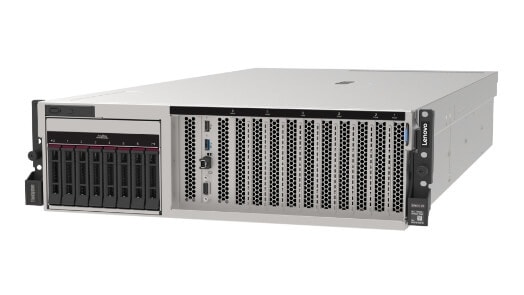
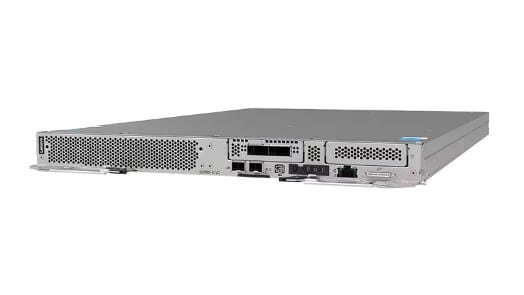
ThinkSystem Servers for AI Workloads
Lenovo ThinkSystem servers provide computing infrastructure for AI and data-intensive workloads. Depending on the system and configuration, they can support training, inference, analytics, and other compute-intensive AI applications.
ThinkSystem servers can support AI environments that require:
- AI model training
- AI inference
- Machine learning workloads
- Data processing and analytics
- Generative AI workloads
- High-performance computing
Organizations can evaluate ThinkSystem configurations based on workload characteristics, processing requirements, data volume, storage needs, and deployment scale.
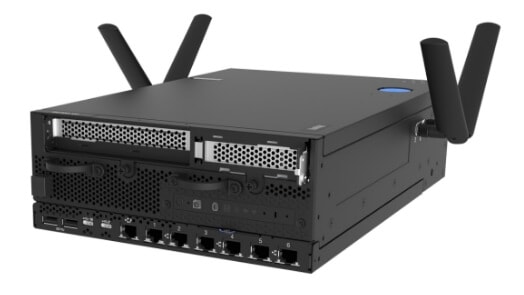
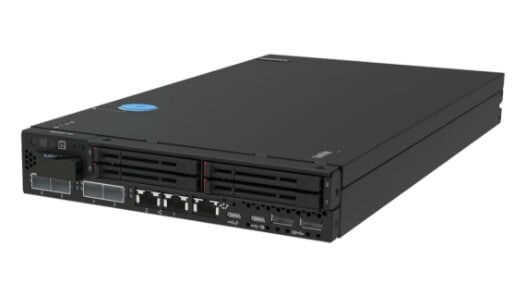
ThinkEdge Solutions for Distributed AI
Lenovo ThinkEdge systems support computing closer to where data is generated. They can extend AI processing into edge and distributed environments where local compute is part of the workload.
ThinkEdge solutions can support AI workloads involving:
- AI inference at the edge
- Computer vision
- Video analytics
- Local data processing
- IoT and sensor-driven workloads
- Distributed operational environments
Organizations can evaluate ThinkEdge configurations based on workload requirements, data sources, connectivity, processing needs, and deployment location.
Lenovo AI Services and AI Innovators Ecosystem
Lenovo AI Services and ecosystem capabilities can support organizations beyond infrastructure selection. They can help connect AI use cases with solution design, implementation, deployment, and ongoing operations.
Lenovo AI Services and ecosystem capabilities can support:
- AI planning and expertise
- Solution design
- Implementation
- Deployment and scaling
- Governance considerations
- Industry-focused AI applications
Organizations can also explore the Lenovo AI Innovators ecosystem for solutions involving computer vision, audio recognition, prediction, virtual assistants, and other AI use cases.
Lenovo AI Discover Centre of Excellence
The Lenovo AI Discover Centre of Excellence provides access to AI experts, workshops, technical knowledge, and best practices. It can support organizations as they explore use cases and evaluate approaches for developing and scaling AI solutions.
The Lenovo AI Discover Centre of Excellence can support areas such as:
- AI use-case exploration
- Generative AI assessment workshops
- Computer vision assessment workshops
- Technical guidance
- AI best practices
- Scaling considerations
Organizations can use these resources to better understand AI requirements and explore practical approaches for moving AI initiatives forward.
Together, Lenovo infrastructure, edge computing, services, ecosystem solutions, and AI expertise can support workload-specific AI requirements across data centre, hybrid, and distributed environments.
Building an AI Foundation That Can Evolve
AI requirements can change as projects move from exploration to production. Models may grow, datasets can expand, more users may connect, and workloads may spread across additional locations.
Starting with the use case, understanding the data, sizing the workload, and selecting an appropriate deployment approach can help organizations build AI environments around current requirements while keeping future needs in view.
Lenovo AI solutions bring together infrastructure, edge computing, services, and ecosystem capabilities to support AI workloads across data centre, hybrid, and distributed environments.