

View Transcript
Alexa Carlin (00:37):
Hello and welcome to Accelerating Your AI Journey. I'm your host, Alexa Carlin, and today we're talking about the power of AI, specifically the power needed to develop, implement, and run AI in the data center and what that means with regards to sustainability. Joining me today is Scott Tease, Vice President and General Manager of Lenovo Infrastructure Solutions Group. So welcome, Scott. It's so nice to have you here.
Scott Tease (01:06):
It's great to be here, Alexa. Thanks for having me.
Alexa Carlin (01:07):
Yeah, we're excited to dive into the conversation.
Scott Tease (01:10):
Me too.
Alexa Carlin (01:10):
To start, just tell me a little bit about yourself.
Scott Tease (01:13):
Yeah, so I work at Lenovo. I've been there for about 10 years. I run all of our hardware portfolio for everything in the solutions group, so anything in a data center, out at the edge, kind of enterprise business. One of the focus areas for us is sustainability. We're looking at how we can design, deliver, run the most sustainable IT in the industry, and that's a big part of what I do.
Alexa Carlin (01:32):
Yeah, interesting. So what inspires you to be passionate about sustainability?
Scott Tease (01:37):
Well, so we've got this great planet. I live in North Carolina. It's beautiful here. I want to make sure it's beautiful for many generations to come. So I want to make sure the devices that we're building here and all around the world are as limited impact on the environments we possibly can. And one of the ways we can do that is through proper design. We can make sure the products are designed to be recycled at their end of life. We can close the supply chain loop on them. One of the big focus areas for the team and I is making sure that the products use as little power as possible. And you may say to yourself, "Why does power consumption matter?" But if I look at all of our devices, whether it's that ThinkPad right there or my Moto phone, or a data center server, almost the number one contributor to CO2 is the power consumption.
(02:19):
And the reason for that is over a life of a product, uses a lot of power. All that power has got to be generated, and we generate it by burning fossil fuels, oil, gas, coal. Whenever we do that, we release carbon into the environment. So if I can build a product that uses less power, I'm automatically reducing my impact on the environment. So that's a big part of the focus that we do at Lenovo.
Alexa Carlin (02:39):
Yeah, I mean, we're never going to get away from the power essentially. It's just about minimizing it.
Scott Tease (02:44):
It's about minimizing it and also about it helping the grid itself go green. I mean, our goal is by 2040 to have a power grid that's based fully on renewable sources, things like solar and hydro and all renewable power, non-emitting sources. But it's going to take a while to do that. If during that time we're making the migration of those green sources, we're adding all this new power consumption for things like electric vehicles and data centers. It just makes the journey even harder to go on.
Alexa Carlin (03:10):
So we're increasing our power usage, and then we're trying to decrease it on the grid line.
Scott Tease (03:16):
People often say, "Hey, 2040's a long way off." When you think about our power grid, it's taken years and years to build that. We've got to get rid of all the sources that burn coal and oil and natural gas, and replace them with solar or hydro or any other type of non-emitting power. That takes a very long time. And already, we're running into times where we don't have enough power. You see it through rolling brownouts through the summertime when the air conditioning's on everywhere, things like that. So it's a bad combination. We've really got to think smartly about the future and what's going to draw that power. And that's why we spend so much time at Lenovo focusing on the power consumption of all of our devices. So many ThinkPads and so many Moto phones and so many of the new data center servers that are consuming a great deal of power, I want to make sure that we're doing it more smartly. We're using every watt of power we get as smartly as we possibly can.
Alexa Carlin (04:05):
And that's so important. I would say a lot of people are so focused on innovation and making sure they're ahead of the curve, and they're just thinking about what tech they can create or what new AI application, but they don't also think about all the negative effects of that. Because there's a lot of positive on the workplace productivity but then we're talking about our planet here, and it doesn't really make sense if we're not taking care of where we're all living.
Scott Tease (04:31):
No doubt whatsoever. One thing I am confident of is some of the AI that we do and the high-performance computing that we support at Lenovo, I know confidently that the research and innovation that's going to come from that is going to make the world a better place. But as you say, we've got to make sure it's a sustainable place as well.
Alexa Carlin (04:49):
Yeah, that's so important. So talking about this, about sustainability, what are you hearing from Lenovo customers regarding sustainability?
Scott Tease (04:59):
Yeah, we're hearing from a lot more than we used to about it as a topic. Being a global company, we're fairly fortunate. We get to talk to customers literally all over the world. Europeans have been worried about sustainability and talking about it for quite some time. So they're probably our leading customers around the world when it comes to forward-thinking, thought-provoking methods that we can do for energy efficiency and sustainability. So we listen to them. They're already, when they're asking for new IT, like when they're purchasing new IT, there's already a big section of that procurement document that covers sustainability.
Alexa Carlin (05:33):
Oh, so they ask about it before they even go and purchase it.
Scott Tease (05:37):
Before they even purchase, they're already thinking about it.
Alexa Carlin (05:38):
I feel like that everybody should have that in their formula of deciding.
Scott Tease (05:44):
It's getting more and more. And as power goes up, the challenges of finding power to power all this gear in a data center is getting more challenging. So it's kind of enforcing that behavior. One of the things we've got going for us when it comes to sustainability is power comes at a cost. Every watt we burn is a certain amount of dollars or euros or what have you out of your pocket. So if I can convince people that there's economic benefit for them reducing their power consumption, they'll also get the sustainability benefits for free. The two go hand in hand, and I think that's going to help drive even more behavior towards this, again, upfront thinking about how to buy a more sustainable IT infrastructure.
Alexa Carlin (06:21):
So focusing on sustainability can have a bigger ROI.
Scott Tease (06:25):
Oh, much, much bigger ROI. Certainly, Alexa, it'll have a much bigger ROI for the research that you're doing with it. Again, let's just think about an energy efficient building design. I can make sure that I'm not overheating it, overcooling it. I can make sure I understand where the sun's going to hit so that we know where we need to put extra insulation, all those kinds of things. AI and high performance computing, they can help us do that. Once that building's built, we're going to get a lifetime of benefit back from that initial research. So I have no doubt that you're going to see bigger benefit than the initial expense to set it up and the power it's going to consume. But again, we want to make sure that even from the very start, we're doing it better than others.
Alexa Carlin (07:03):
Yeah. I mean, if you don't do it from the start, it could actually probably add more costs down the road.
Scott Tease (07:08):
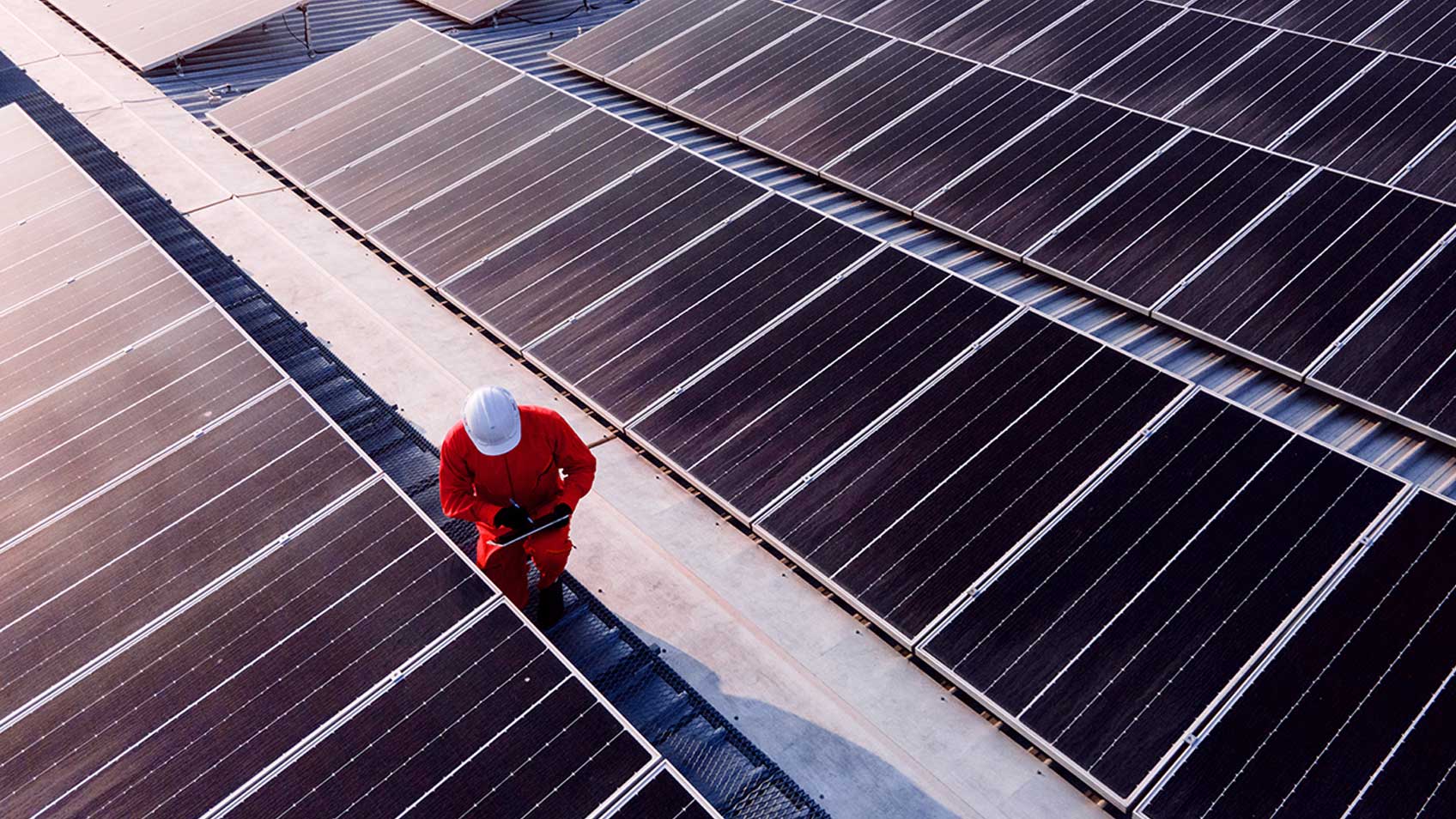
Without a doubt. Power costs itself are going up considerably. Again, going back to Europe again, 3X power costs in Germany, two and a half increase in power costs in the UK. I mean, they're really feeling the pain of what we're likely going to feel here in the US as we try to force the grid to go more green. It's going to be costly. The good news is as we reduce our power consumption, we're going to save our energy bill. If we're reducing our power cost, that means we can also invest in other initiatives. So if you go out to the Lenovo campus here in town, it is covered with solar panels.
Alexa Carlin (07:44):
Oh, really?
Scott Tease (07:44):
Every parking garage, every building, every lab. Other than some of the really high, high power labs, I think we power nearly everything at that campus with solar. And we've been able to do that because-
Alexa Carlin (07:44):
That's amazing.
Scott Tease (07:56):
It is amazing. We've been able to do that because we've saved money by being in a more energy efficient building. Our building is LEED certified, so it means we're using less every month, and it allows us to put some investments into things like solar power and things like that. And more people have got to do that.
Alexa Carlin (08:11):
Oh yeah, definitely. That's really cool. I'd love to check it out.
Scott Tease (08:13):
Anytime.
Alexa Carlin (08:14):
They'll give me a tour?
Scott Tease (08:15):
Anytime.
Alexa Carlin (08:16):
Awesome.
Scott Tease (08:17):
Anytime.
Alexa Carlin (08:17):
So what impact have you seen that... The widespread adoption of AI, how has it had an impact on data centers overall? You're talking about how your building's really focused on sustainability, but now everyone's adding AI, which takes up a lot of power.
Scott Tease (08:17):
Power, yeah.
Alexa Carlin (08:37):
So let's talk about that a little bit.
Scott Tease (08:39):
Yeah, maybe we should baseline a little bit.
Alexa Carlin (08:40):
It's a lot.
Scott Tease (08:42):
A lot. It's a lot. Let's baseline a little bit. So if you think of a normal server in the data center, they cost about a kilowatt to run, a kilowatt of power to run that. So a thousand watts. An AI server, each one could easily be 10 to 12 kilowatts. So you're talking about 10 to 12 times more power per server to run an AI server. And people are installing lots of them right now. So you put all these servers together into a data center and all of a sudden you've got a massive amount of power. So the first thing that customers are running into is where to put it? Where can I locate it where I actually can have enough power access? I can't just run new wires from the street to my house. I need a power station to deliver that kind of power.
(09:22):
So that's the first thing people are running into is where am I going to actually place this? Where can I find the power to run it? The second is most of our customers have sustainability goals of some type. They may be 2050 goals for being carbon net-zero by 2050, but this AI path is increasing power consumption. I've already mentioned that power's one of the big drivers of CO2. So it's causing them to rethink their sustainability goals. That's the second big thing. But I would say the data center side of it is the most complex part of what we're seeing in the customer's mind. That's the one they're struggling with the most. It's just finding data center space.
Alexa Carlin (09:59):
And what solutions has Lenovo come up with?
Scott Tease (10:02):
The first thing is just baselining what you've got. So one of the things Lenovo does do is they have data center servicing. We have services that go out and they'll actually size up what data center you have, what you need to get more efficient. We do a lot of that. We're actually taking people on a journey right now from an air-cooled data center to a liquid-cooled data center. And that's a unique skill that Lenovo has. We've helped a hundreds of customers go from a traditional air-cooled data center into one of these new water-cooled data centers. And the reason we do that is air cooling is... It's inefficient. Moving lots of air around the building, moving lots of air through a server to keep it cool, costs a lot, a lot of power.
(10:41):
If we do it with water, we can do it with warm water so we don't have to chill the water. And it's a lot less energy to pump a little bit of water loop through a server and through the data center than it is to move massive amounts of air. So the first thing we typically look for is how much power reduction can we see through the move to water? And in a lot of these data center service things we're doing, we're seeing 40% reductions in the energy to run that data center. Just getting rid of air conditioning, 40% reduction. So really big, yeah.
Alexa Carlin (11:07):
That is really big. So is that proprietary to Lenovo?
Scott Tease (11:12):
Well, so we have this technology we call Lenovo Neptune. And that is proprietary. It's trademarked, and we're very, very proud of it. Other people are looking at liquid cooling, but we have some unique things we do. The biggest unique thing we have though, is servicing it. Again, people have been doing air-cooling servers and air-cooled devices for a long, long time. Migrating from air cooling to water cooling, it does take some insight and some knowledge. Our teams bring that. So that's a big part of what we do. But that from a technical perspective, we're pretty unique. We use pure water to cool these servers. A lot of our competitors use glycols and different kinds of solvents, which may or may not be safe for us. They have to chill the water, which means you've got to pay to chill the water off to make it cold. We use hot water to actually cool the server. Believe it or not, the hot water heater that you have at your home to heat your hot water, it's probably about 140 degrees Fahrenheit. We can cool servers with water almost that hot.
Alexa Carlin (12:07):
Wow.
Scott Tease (12:07):
So it's really amazing technology. So what that means to the customers is they can use the water and not have to chill it, not have to pay the money to bring the temperature back down again. They can just send it back through the servers. It's a big power savings. And again, great sustainability benefits,
Alexa Carlin (12:21):
Right, and savings to your bottom line.
Scott Tease (12:23):
Exactly. Again, you think about this. When you stand next to an air conditioner, you feel that air moving through. Imagine in a data center, you've got a thousand times that air volume. Moving all that air has a tremendous amount... It causes a tremendous amount of fans, and all those fans consume a lot of power. With liquid cooling, we're taking a really small pipe and we're plumbing water to the server directly. The water's going over all the heat-generating components, the processor, the memory, the networking, the power supply, and it's taking the heat directly out in the water loop and sending it back to the cooling plant. So we're basically taking all that heat out of the data center with no air conditioning at all, no need for any air conditioning. So it's pretty cool tech.
Alexa Carlin (13:02):
That is really cool. How many people have adopted that so far?
Scott Tease (13:04):
Oh, hundreds of customers around the world.
Alexa Carlin (13:07):
Amazing.
Scott Tease (13:08):
Again, started in Europe. Our very first customer's in Germany. But it's now gone global. And with AI driving more and more power, it's just bringing lots more customers to looking at this technology. So it's pretty exciting. It's a great time to be in IT.
Alexa Carlin (13:22):
Yeah, definitely. That actually brings me to a question I had about how are factors like rising energy prices and aging infrastructure compounding these challenges?
Scott Tease (13:32):
So again, the biggest challenge most customers face as they're trying to adopt the big AI is where am I going to place it? Where am I going to put it?
Alexa Carlin (13:38):
Okay.
Scott Tease (13:40):
An AI data center could easily be hundreds of kilowatts, if not megawatts of power. These are as much as small cities, like small towns. That's the same amount of power as some of these data centers are consuming. It's a massive amount. So where to put it? And a lot of people have these older data centers. So a big part of what Lenovo can do for them is come out, survey what they've got today, and figure out how we can retrofit it. That room, that data center you have, has likely got a lot of value to it. We just got to figure out how to modernize it. And that's a lot of what the [inaudible 00:14:08] does.
Alexa Carlin (14:08):
So you're kind of like architects of a data center.
Scott Tease (14:12):
We're re-architecting, in partnership with the customer, about how we can take what they have and get more out of it. We talked about the air conditioning. That could easily consume 40% of the power going just to the air conditioning, not to run the AI, not to do any high performance computing or research, just air conditioning. So if we could minimize that, maybe take that down from 40 to 20, the rest of that power could go to the IT itself and be used for good, be used for some kind of business value. And that's a big part of what we're talking to clients about.
Alexa Carlin (14:41):
Yeah, I love how you're focused on, "Let me just bring it down from 40 to 30, 30 to 20%." Because I feel like we get so a lot of the times, whether it's overwhelmed in keeping up with AI technology or overwhelmed with all the sustainability efforts we need to put in, but it's really just about those small steps makes such a big difference.
Scott Tease (15:05):
I think people need to be comfortable. There's no single silver bullet here. It's incremental improvement. Its, "How do I make a difference here, and how do I make a difference in what power I buy, and how do I make a difference in how much power consuming per server?" It's all those things together that are really going to make the difference overall. The big one is going to be when the grid itself goes green. That's a decade and a half out from now. So we got to do a lot between now and then to do our part.
Alexa Carlin (15:31):
So for all the IT professionals listening to this, what can they do today to help their workforce, their data centers be more sustainable?
Scott Tease (15:42):
Yeah, I think the first thing they should look at is rightsizing the AI itself, and we can help with that. So you're reading a lot about these very big GPU machines and things like that. Not everybody needs that. Much of the AI that's running today can run on something like that laptop or a small Edge device, something that could be attached to the wall right here. Very lightweight, very low power. So first thing is make sure you're not overdoing it with the AI you're trying to buy. Not all AI takes those 10 kilowatt, big, expensive servers. A lot of it is very lightweight. It's just rightsizing for the job. So I think that's the first part.
(16:15):
Second part is think about how much of your power is going to those things that don't provide business value. How much is going to air conditioning, how much of it's going to fans? Let us think about how we can do smarter things with that power. One example that I love is in Massachusetts, they have a thing called the Massachusetts Green High Performance Computing Data Center. It's on the Connecticut River. They get 90% of their power from hydro. So 90% of their power is coming from a renewable source. They liquid cool those servers. So we don't have to have air conditioning. We wouldn't need chilling. At some point if they wanted to, they could actually take the water that comes out of the server, which is very, very hot water, and they could use that to heat buildings. I mean, it gets kind of cold in Massachusetts in winter. They could actually use that water to heat the buildings next door, even their neighbor's buildings, and maybe free up more power that could go into the data center to run more research. So some cool things that we can do.
Alexa Carlin (17:08):
Yeah, very circular.
Scott Tease (17:10):
It is, absolutely.
Alexa Carlin (17:11):
And that's similar to what you're all doing with reusing or upcycling different tech devices.
Scott Tease (17:18):
So we talked about operating the systems and how we want to make sure we're doing that. But let's say you're replacing IT gear. The IT gear you have on the floor, it still has value. There's steel in there. There's plastics in there. There's heavy metals in there. Let us take that back. We have something called Asset Recovery Services. We can go out, we survey what you have. We take all that stuff back. We actually write the customer a check for the value of the gear, because a lot of times it has value. We'll literally sweep the floor, nice and clean for the new stuff to come in, but then we'll close the loop on all that old stuff. We have mandates at Lenovo that certain percentages of our products have to be post-consumer recyclable. Those post-consumer roles got to come from somewhere. We want them to come from that old gear that we're taking off the floor.
Alexa Carlin (18:02):
It could be any brand or-
Scott Tease (18:03):
It could be any brand. It could be any brand. It could be any IT. It could be laptops, it could be servers, it could be storage, anything out there. We'll find a way to recycle it. Sometimes we'll upcycle some of the parts and use them for replacements for some customers. Other times we'll recycle the base components, the steels, the zincs, the aluminums, things like that. They all have value. And the carbon footprint of the steel and of the aluminum recycle is far lower than the carbon footprint of generating new virgin material. So we're helping close the loop on that. And then we make sure that all the servers we're building today are designed to be a hundred percent recyclable. So at the end of their life, we'll be able to do the same thing again.
Alexa Carlin (18:39):
Wow.
Scott Tease (18:39):
Nice, yeah.
Alexa Carlin (18:39):
Yeah. Very cool. So if you have old gear, just call up Lenovo.
Scott Tease (18:43):
Absolutely. We can definitely consolidate it down.
Alexa Carlin (18:46):
That's amazing. You talked about this a little bit, but are there other kinds of services that Lenovo offers different organizations to reduce the overall power consumption in the data center?
Scott Tease (19:01):
Yeah, I think one of the ones that we don't talk about very often as a kind of a sustainability thing, it's something we call TruScale. It's a as-a-service offering that we do. One of the nice things about TruScale is we monitor and manage the system for the customer. So we make sure that it's always running as optimally as we possibly can. We actually meter the use of the server based on its power consumption, so we can tell exactly what it's consumed from a power perspective. And when it's not being used, we can put it into these low power states. So instead of having something that's running all the time at these peak loads, with TruScale, we put it in. As you need it, you consume. It as you don't need it, we'll power it down. So that's a great way just to minimize the amount of power consumption you've got and lower the impact just without having any negative impact on the business because we'll turn it on and off as you need it.
Alexa Carlin (19:47):
Oh, so it's very customized.
Scott Tease (19:48):
Extremely customized. It's there when you need it.
Alexa Carlin (19:51):
So are there any other things that we didn't touch on and you'd love to talk about regarding Lenovo and how you're really embracing the circularity of things with the onset of AI and the growth of power consumption to make the world a more sustainable place?
Scott Tease (20:08):
Oh, man. There's so many great uses of AI. Again, I know AI right now is getting a little bit of a bad rap because it's consuming quite a bit of power. But the good that it's going to do... We've been investing in something called High Performance Computing, which is very similar to AI for two decades now, and the work that's coming out of that in research for healthcare... You're originally from Florida, right?
Alexa Carlin (20:29):
Yes.
Scott Tease (20:29):
So that hurricane that just came through and hit south of Tampa, we knew exactly where that hurricane was going to go four days in advance. They could almost pinpoint where that hurricane was going to go. That's only because of research on weather forecasting and weather models all being done in this type of IT. So again, it has tremendous value. What we're going to see with AI is we're at the very, very beginning of it, but it's going to be game-changing for the world. So we're really excited about it.
Alexa Carlin (20:55):
And I think that's what's so important. I think we need to focus on the positive because a lot of times we think... You hear the conversations, "It's going to take over people's jobs." It's just we live in this AI-powered robot world where everyone knows so much information about ourselves. People are nervous about protecting their data. And then there's the whole environmental issue. But if we just focus on the positive that it will do for humankind or our progress and then make our best effort to protect the environment and also just our way of living to make it still where there's this human-to-human connection.
Scott Tease (21:34):
Yeah, right, exactly. No doubt. As a consumer, we're used to having AI all around us. We no longer think about it as AI. So if you have an Alexa device at home or a Google Home device and you say, "Hey, turn on the lights," or, "Show me the camera," or whatever, that's full of AI. It's just totally embedded in the way that we work, in the way that we live. We want the same thing in enterprise. We just want it integrated in the workflows to make it all better. I really don't believe that we're going to see AI replace jobs. I think what is likely, however, is that a engineer that is using AI to supplement their skill set is going to replace an engineer that isn't. So it's more about augmenting our own intelligence or improving our own efficiencies than it is about replacing human beings.
(22:25):
We can use AI to read radiology exams. We can easily do that. It will not replace the radiologist, but what it can do is allow one radiologist to do a lot more because it can pinpoint to the radiologist where we think they might want to place their efforts. So we're fortunate. We're here in the Research Triangle Park in North Carolina. We've got great hospitals. We've got Duke, we've got UNC, we've got WakeMed. Not everyone around the country or around the world has that same level of access to skilled radiologists and skilled doctors. If we could use AI to extend the reach of those doctors that are available, those are the kind of things that are going to be game changing for people all around.
Alexa Carlin (23:01):
Right. Yeah, that makes a lot of sense. Just thinking outside the box of what's possible.
Scott Tease (23:05):
Exactly. Exactly.
Alexa Carlin (23:06):
So I have one final question for you, Scott. What does smarter AI for all mean to you?
Scott Tease (23:12):
Oh, man. So this is a great one. So when you hear about AI today, it's mostly about the big cloud providers. It's about Facebook or Meta. It's about AWS. It's about Microsoft driving AI. And they're doing amazing things with AI. But for AI to really take off, it needs to be everywhere. I want it in everybody's pocket. I want it on everybody's desk, and I want it in everybody's data center. That's the power of true AI. Not all AI can be run in the cloud.
(23:42):
When I turn my Moto phone on, I use my thumbprint to do that. The technology that's allowing me to do that is AI. It's identifying my thumbprint. It's running right there on my device locally. The model itself was built in a data center out in the cloud. So it's kind of a hybrid world where we're doing some parts of the AI value chain on the device and some parts out in the cloud or in a corporate data center or what have you. The world is going to be just like that for everything we do with AI, and it's going to be exciting. So it's just about putting the right value in the right area of the chain so that you've got basically AI everywhere.
Alexa Carlin (24:17):
I like that.
Scott Tease (24:18):
That's what it's all about, yeah.
Alexa Carlin (24:19):
Well, thank you so much, Scott.
Scott Tease (24:20):
My pleasure. It was great to spend time with you.
Alexa Carlin (24:22):
Yeah, it was a great conversation. So again, I'd like to thank my guest, Scott Tease, Vice President and General Manager of Lenovo Infrastructure Solutions Group, for stopping by and talking with us today. And thank you for watching. Visit us online to learn more about how Lenovo can support your sustainability efforts while accelerating your AI journey on the road to smarter AI for all.
MUSIC (24:55):
Lenovo.
(24:55):
Lenovo.

Scott Tease
Vice President & General Manager, Lenovo Infrastructure Solutions Group
Scott Tease has been with Lenovo since October 2014 following the acquisition of IBM’s System x team. Prior to this, he spent 14 years as a member of the IBM System x Executive Team. At Lenovo, he and his team are responsible for end-to-end AI and HPC strategies – focused on leadership in the mid-market and strong presence in the TOP500. His goal in this area is to deliver responsible AI that is easy to consume for customers across nearly all industries.
A Refreshing Approach to Technology Refreshes
Patricia Wilkey, Senior Vice President and General Manager, International Sales, Lenovo
Embracing Circularity as a Sustainable Practice
Matt Jones, Vice President of Strategy and Operations, Commercial Segment, Lenovo
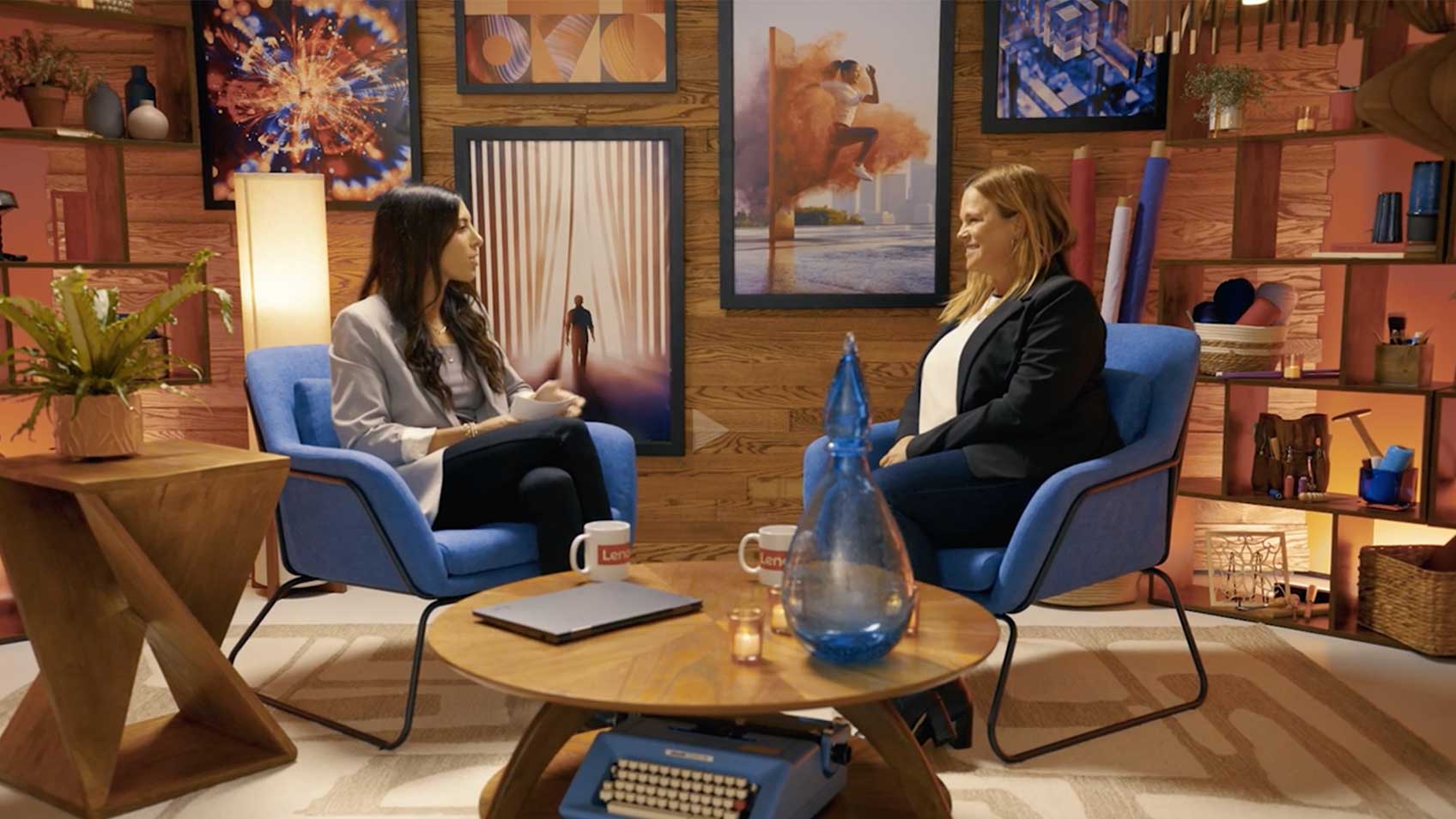
Balancing the Promise of AI With the Need for Sustainability
Marshae Mansfield, Vice President and General Manager, Global Accounts, Lenovo

Windows 11 Migration
Provide more powerful experiences and consistency with better security for all.

AI PC With AMD
Streamline and enhance everyday tasks with smarter AI that’s personalized for each user.

AI PCs With Intel®
Dive into how AI PCs provide more personalized, productive, and protected experiences.
Empower Employee Experiences With AI
Learn how to empower your teams to do more with AI-powered tools and Lenovo’s Digital Workplace Solutions.
Navigating Sustainability in the AI Era
Find out how you can leverage AI and still meet your sustainability goals.

Lenovo AI Services & TruScale
Get help expediting and scaling your AI transformation.

Hybrid AI With AMD
Learn how to drive innovation, efficiency, and real-world impact with high-performance computing.
Hybrid AI With NVIDIA
Accelerate your AI journey and drive ROI with hybrid AI, data orchestration for all, and agentic AI.
Contact Us
Meet Your Host,
Alexa Carlin
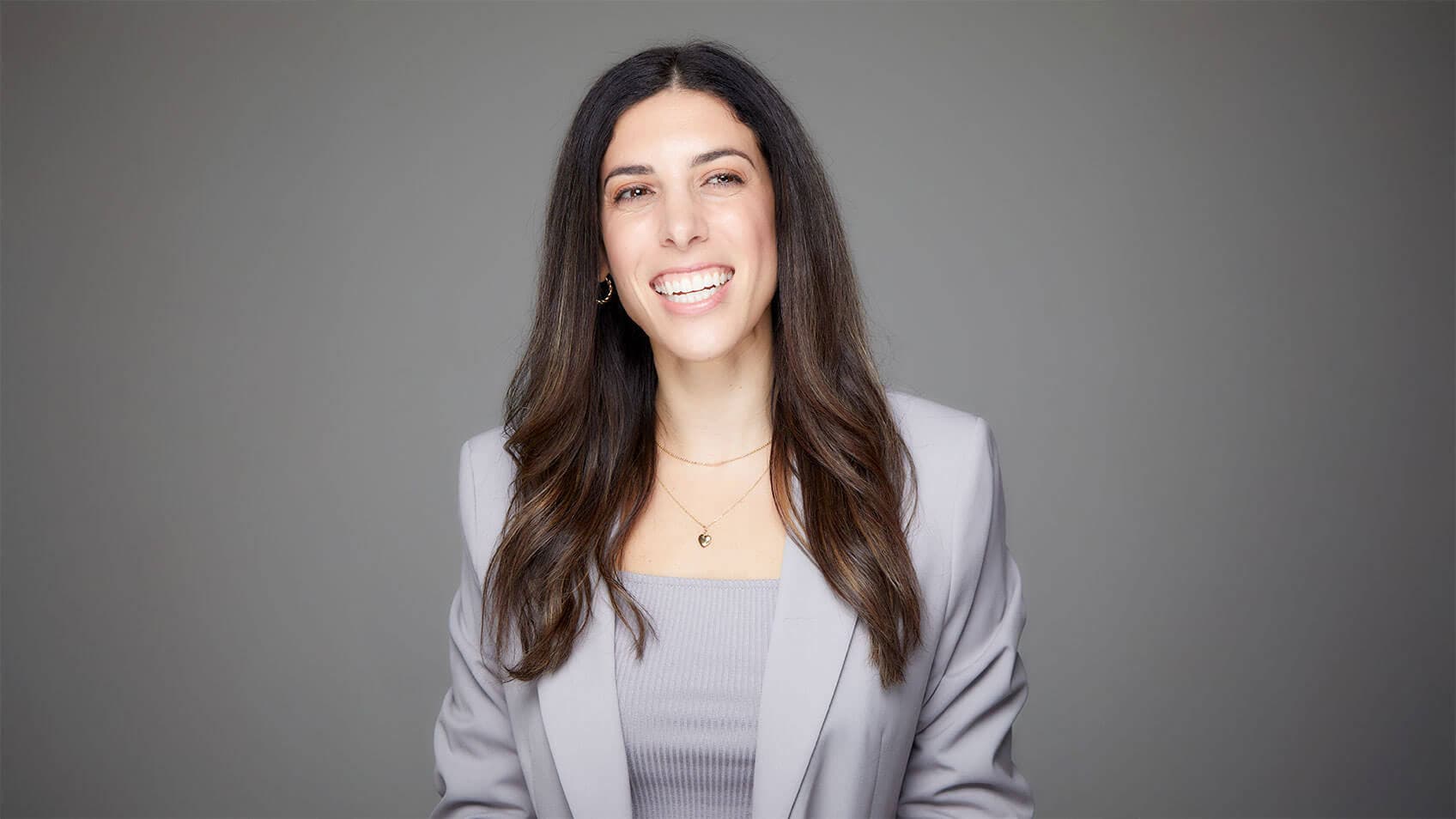
Alexa Carlin is an in-demand public speaker, bestselling author, top content creator for women's empowerment, and the Founder of Women Empower X. Alexa has worked with Fortune Global 500 brands to create captivating and relatable content. She has been featured on the Oprah Winfrey Network, Cheddar TV, FOX, ABC, CBS, TEDx and in Entrepreneur, Glamour Magazine, and Forbes, among others.

