
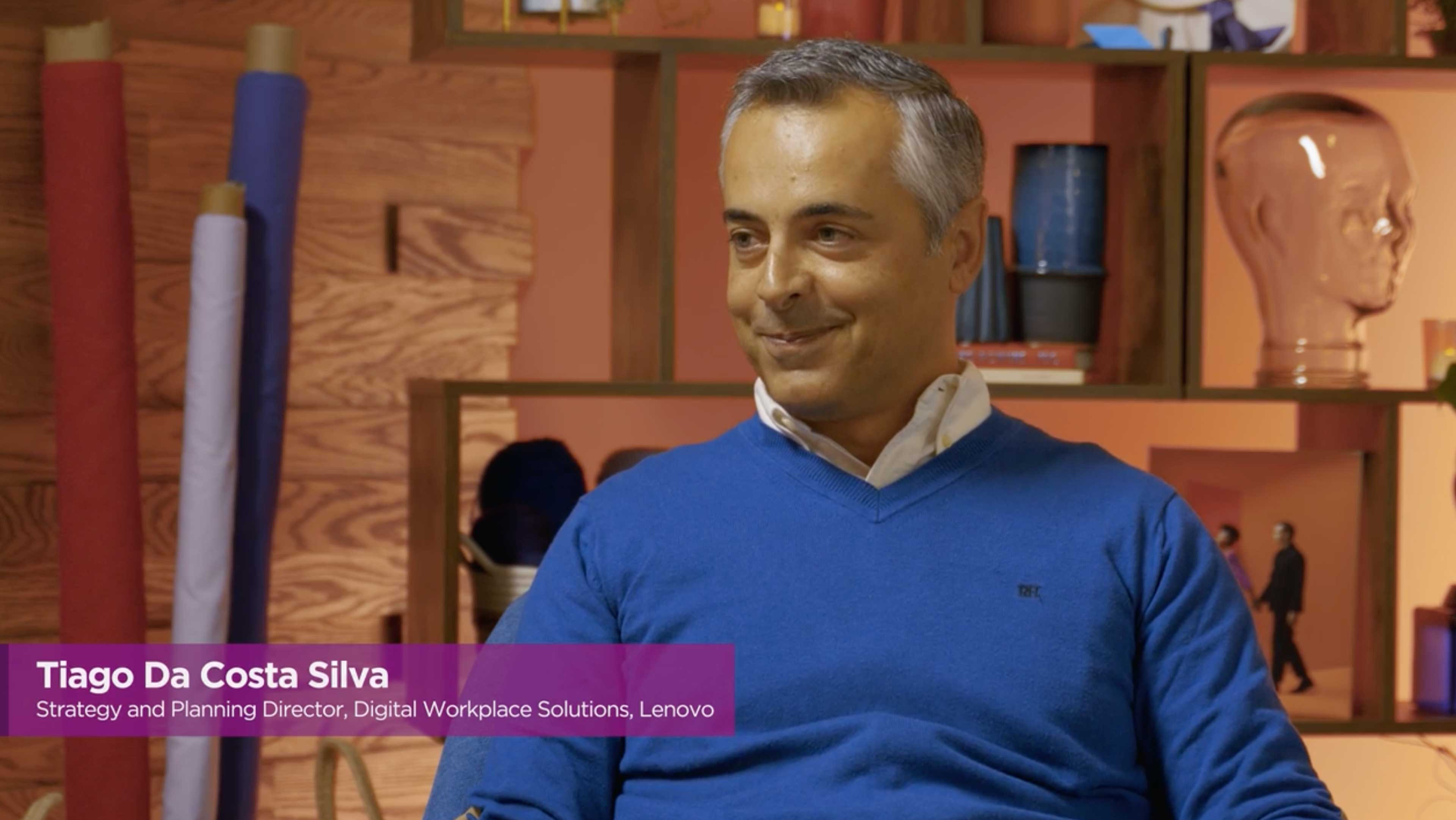
View Transcript
Alexa Carlin (00:36):
Hello and welcome to Accelerating Your AI Journey. I'm your host, Alexa Carlin. And today, we're talking about three very important letters when it comes to AI-powered workplace solutions, ROI. How can IT leaders demonstrate that the solutions they're under pressure to implement are delivering real value? And how can they accelerate delivering that value? Joining me today is Tiago Silva, strategy director for Digital Workplace Solutions at Lenovo. Welcome.
Tiago Silva (01:12):
Thanks for having me, Alexa.
Alexa Carlin (01:13):
So first, Tiago, just share a little bit about yourself and your background.
Tiago Silva (01:18):
Absolutely. So I've been in the technology space for 25 plus years. I've seen a lot of technology revolutions. We have the internet, we have the VoIP, the Voice over IP, the IoT, the Internet of Things, clouds, and now AI. So many things. And AI is definitely one of the biggest ones. So I'm really excited about AI and how we can help to transform the world the way you do business, leveraging the AI revolution.
Alexa Carlin (01:50):
Yeah, the AI revolution. So where do organizations struggle with demonstrating ROI and AI initiatives in the workplace?
Tiago Silva (02:01):
Yeah, I think organizations sometimes starts by thinking what AI can do for me versus what I need AI to do for my organization. So what are the outcomes that I expect? What can help my business? And then how can AI potentially help me to get there? So it's a different way to frame the question. What can AI do for me versus AI technology can do all these different things, and where do I need to get the most out of the technology? I think what's needed is what does my business need from an outcome perspective, and then look at AI to see if an AI can help me to accelerate getting there.
Alexa Carlin (02:45):
Interesting. So are you noticing that most people are still struggling to figure out how to implement AI into their workplace?
Tiago Silva (02:54):
Absolutely. Absolutely. AI is very complex. The data that is leveraged, the large language models versus the small language models, where will the AI engine reside. So it's very, very complex. And sometimes, people and businesses needs to make a decision. Am I going to leverage others that can help you to accelerate my journey or I'm going to invest internally and try to get there, which might take you a bit longer and maybe there is a higher risk of failure? So I think it's important to look at how others have been doing, expertise in this area, and leverage those experts.
Alexa Carlin (03:32):
So when you say leverage, can you dive a little bit more into that, like what Lenovo is doing with your suite of solutions and how other businesses are able to leverage what you've created?
Tiago Silva (03:44):
Absolutely. So Lenovo has been leveraging AI internally for quite some time, and we also offer solutions for our customers that allow them to expedite the return investments to get to those outcomes faster. Every-
Alexa Carlin (03:57):
We're all about speed.
Tiago Silva (03:58):
Absolutely. All about speed, all about speed. So every situation is different. There is no AI solution, AI products that will fit all. And there is a level of customization that sometimes is needed, but it all starts by understanding, what are we trying to get of the AI technology? What is that outcome or outcomes that we want to drive? And then going from there, looking at what is available from an AI technology standpoint and putting a plan in place that will drive adoption and will get us to those outcomes faster. So Lenovo has a group that can help you with this. From the initial conversation to getting the outcomes faster.
Alexa Carlin (04:36):
So figuring out even what those outcomes are?
Tiago Silva (04:39):
Absolutely.
Alexa Carlin (04:39):
Because I feel like with AI, there's so many possibilities that most people are still thinking too small.
Tiago Silva (04:46):
Absolutely.
Alexa Carlin (04:47):
So your workplace helps with figuring out, "No, let's go a little bit even further and find a better outcome."
Tiago Silva (04:55):
Absolutely. Breaking those boundaries. AI can help us to do a lot more things nowadays. AI is not a new technology. It's been around for quite some time. Compute-
Alexa Carlin (05:05):
Which is crazy.
Tiago Silva (05:06):
... the acceleration.
Alexa Carlin (05:07):
Yeah. It seems like it's brand new.
Tiago Silva (05:09):
Exactly. Exactly. That's what people think. There were new developments with GenAI, the natural language models. So absolutely, there were new developments and that includes the computers as well that was needed for us to get to where we are now in terms of this AI revolution. So our group, with our experience, we can help you to sometimes uncover outcomes that you didn't even think about. Different ways to do things. And we provide that as part of our services, our digital workplace services, but we also have a practice, specialized service, that helps you through that AI journey. Almost a fast start. You start, but you start really fast to get to those outcomes that you want to.
Alexa Carlin (05:53):
Interesting. Do you have an example of a way that AI accelerated your own team at Lenovo?
Tiago Silva (06:01):
Yes. So one of the outcomes that we want to provide to customers and internally as well is about getting better user experience, users being more productive. So in order to do that, we actually developed this platform called Care of One, where we drive hyper personalization. So the AI engine will figure out what is the best hardware, the best software, the best services that you need as a persona.
Alexa Carlin (06:34):
Oh, customized to them?
Tiago Silva (06:36):
Customized. Absolutely. Absolutely customized. So it'll help to figure out. And it's not just like a one time, this engine will keep doing. So with your needs change throughout the life cycle of your career, of your role, the engine keeps adopting, optimizing your persona.
Alexa Carlin (06:53):
Wow.
Tiago Silva (06:53):
After that, we can configure your persona, what do you need to be productive with all that information, and we'll keep doing that. There's also a third component where the engine will predict failures that you might have with some of your devices. And with that information, we can automatically leverage then the AI to have the fixes in place without you even noticing that. So by doing that-
Alexa Carlin (07:20):
But you would never even know it was a failure?
Tiago Silva (07:21):
Absolutely.
Alexa Carlin (07:21):
Wow. That's crazy.
Tiago Silva (07:23):
So by doing that, there is no productivity loss from your side. And obviously, your experience as a user will be good because you'll not be frustrated with the fact that a specific device broke down on me, I lost-
Alexa Carlin (07:35):
That's the most frustrating thing ever is like a tech thing that's not working. It's so frustrating. So that's a huge return on investment, is just that level of productivity.
Tiago Silva (07:46):
Absolutely. Absolutely. The level of productivity. And then when we talk about large organizations, the fact that we don't need to have multiple humans looking at the problem, trying to debug the problem, pinpoint what the problem is. AI, with the multiple data sets that have available, can pinpoint the problem faster and then automatically fix it. So that will decrease the costs of support from organizations as well.
Alexa Carlin (08:14):
Right. The amount of people you need on the team working on that.
Tiago Silva (08:17):
And the time spent as well.
Alexa Carlin (08:18):
Right. Wow. So you talked about Care of One. You talked about how it's going to replace some people, but how does it help with obtaining or retaining top talent and recruiting top talent?
Tiago Silva (08:34):
Yeah, let me be clear. In my perspective, AI will not replace people.
Alexa Carlin (08:37):
Okay. Not replace people.
Tiago Silva (08:38):
Not replace people.
Alexa Carlin (08:39):
Just move them to a different role, in a way?
Tiago Silva (08:42):
Or be more productive. Instead of spending countless hours trying to figure out a user device specific issue, if you can resolve that device issue faster, you can then help other users maybe with more complex tasks that AI cannot help with. So it's all about-
Alexa Carlin (09:02):
There are still things that AI can't?
Tiago Silva (09:04):
Absolutely. AI is not going to replace people. AI is going to help people and hopefully, help us to be more productive, and also hopefully, have more quality of life as well with the-
Alexa Carlin (09:17):
And to accelerate the journey.
Tiago Silva (09:18):
Absolutely. Absolutely.
Alexa Carlin (09:19):
So it's more about how they're working today. But regarding just that question of going and recruiting top talent, how do you see companies integrate AI to do that?
Tiago Silva (09:32):
I think everybody wants to work for a company that is in the verge of technology and with the latest technologies. So AI is definitely a game changer. I think we have all seen that in terms of impact in our lives. I've seen that as well. So that top talent, we'll start leveraging AI and hopefully we'll have a much better experience once to stay at a specific company. And obviously, the top talent that is not a specific company would like to move to that specific company because of the experience that other users have been having with AI and not only, it's the overall user experience that we're going to drive as part of our services.
Alexa Carlin (10:11):
Yeah, that's very true. I mean, if you could do things faster and better, I mean, that helps a lot. So going back to this other question I had was, what are some functional areas where AI can make a measurable difference in either improving workplace productivity or reducing costs? You talked a little bit about the productivity, but what about the reducing costs outside of where you said you just need less people to work on those problems? Are there other ways that we can use AI to reduce those costs?
Tiago Silva (10:40):
Yes, absolutely. Again, it goes back to the time that resources might spent on a specific task. If we can automate things, if we can reduce that time, we'll free up people to do other things. And if AI is already resolving some of the issues, we also don't need to have more of those resources and specific department addressing that. We can repurpose those resources to do other things. Time to market as well. If we have AI to help with the different initiatives that are part of product development, if we can expedite that, our time to market will also be faster, and that will reduce costs as an example, with some marketing initiatives. Maybe putting a flyer together that needed the, I don't know, two, three hours, can be done now in a matter of minutes. So that definitely will reduce the costs.
Alexa Carlin (11:40):
And usually, the output is better, in a way where you're asking AI to create something and now all of a sudden, you have a first draft. That's really great. So now you can iterate on that and make it the final outcome even that much better.
Tiago Silva (11:55):
Absolutely. Absolutely.
Alexa Carlin (11:56):
Yeah. It's really, really cool stuff.
Tiago Silva (11:57):
But it'll not replace humans.
Alexa Carlin (11:58):
Yeah, no. I mean-
Tiago Silva (12:02):
It needs to be there to drive that personalization.
Alexa Carlin (12:03):
And ideally, I mean, I would stress that humans need to... Well, the more that you know about AI and the more you know how to work it, the better outcome you have. It's almost like with the ChatGPT, when that came out. If you're a prompt engineer, you're going to get a better outcome from whatever you give it. And so with what Lenovo is creating and your suite of products, you have consultants to help create that input. So you don't have to be like a prompt engineer, I'm guessing.
Tiago Silva (12:36):
Absolutely. You don't need to start from scratch. We can help you get there. Absolutely.
Alexa Carlin (12:41):
That's good. That's good. Because some people were like, "Okay, there's all this technology. It's very confusing." I know a lot of IT leaders, they're getting all this pressure from their bosses or their leadership to integrate with AI, and CEOs are focused on the transformation of the business. And then CIOs are figuring out, "Okay, well, how the heck are we going to make this a reality, let alone make it sustainable, incorporate... Make sure we're meeting the budget?" And so working with your team, you could see the big picture of it is what you're saying?
Tiago Silva (13:14):
Absolutely.
Alexa Carlin (13:15):
To answer those questions?
Tiago Silva (13:16):
Absolutely. So we can expedite that journey instead of folks trying to figure out for themselves what needs to be done. That's a huge barrier right now in terms of AI adoption, is how am I going to leverage this technology to drive the outcomes that I need? And it all starts with the outcomes that I need to drive as a business. And then looking at the technology that is out there from an AI perspective and see, what do I need to get to those outcomes? That's where we come in, that's where we can help to map out that journey and then execute on the journey as well, so the customers get to the outcomes that they need.
Alexa Carlin (13:52):
And talking about where they don't even know what outcomes they want. Also, it could be a little bit intimidating to think, "Okay, what's this big infrastructure I need to build?" And we are talking a little bit off set about this level of hybrid AI. Can you talk a little bit about what hybrid AI is and what businesses would be more interested in that form?
Tiago Silva (14:16):
Absolutely. I'll split it in two areas. The first one is the data that is leveraged for the AI engine to deliver those outcomes. And Lenovo is a strong believer of hybrid AI. So leveraging some personal data that we all have in our devices and then combining that with enterprise data, and in some cases when you see the public data as well. And only that way, we will have the best possible answer. And an answer that will be personalized, tailored to the user needs as well. This is the hybrid AI model that Lenovo believes.
(14:55):
And then from an infrastructure standpoint, going to your question in terms of deployment, it depends on the need of the business and some of the limitations that the business might have. Because you can implement it on-prem, you can implement it in the clouds, or you can have a hybrid model where a portion is on-prem and the other portion resides in the cloud. On the device, and Lenovo as the AI PCs as well, that help to do that computer locally. So in some cases, even if the device is not connected to the internet, is not connected to the backend, you can actually get outputs from your AI device brain just by having an AI PC that has this MPU that can process the AI information.
Alexa Carlin (15:45):
Oh, interesting. Okay. So that's what you mean by personal? When you say... Okay. So it's your own computer?
Tiago Silva (15:52):
It's our own computer that has the data. If you want, let's say you were going on a business trip, but you have a couple of days and there are specific sites that you want to visit, you can actually ask AI to build an itinerary for you. You have the business trip, but then you have a couple of days that you can go and visit sites because you don't need to have meetings on those days, you can ask AI to actually build the itinerary for you based on the information that you have on your PC. So it can look at that data and say, "Hey, Alexa will probably prefer to go to this place versus that place," and then build an itinerary for you.
Alexa Carlin (16:28):
Wow. So it would know that I have kids.
Tiago Silva (16:32):
Personal lens for you.
Alexa Carlin (16:34):
That's really awesome but at the same time, how can you make sure your data is protected and on the business level?
Tiago Silva (16:39):
Yes. So Lenovo is very strict about making sure that the data is protected. So all our solutions, all our devices go through a very strict data security process to make sure that the data on the device is completely secure.
Alexa Carlin (16:55):
So you don't have to worry about that?
Tiago Silva (16:58):
Correct.
Alexa Carlin (16:59):
Okay. Talk about how can as-a-service solutions help offset some of those costs when we're talking about the different lines of hardware infrastructure investment. So speak on those as-a-service solutions.
Tiago Silva (17:14):
Absolutely. It's the pay-as-you-go model. AI compute requires a lot of infrastructure, a lot of investment. So does it make sense for a business to start with that or maybe leverage some compute that exists from someone else, what we call as-a-service? So the beginning of that journey, I think, offers more flexibility, lower entry cost as well, you start getting some outcomes. And then as you go through the journey, maybe at some point you decide, "Hey, it might be better for us as a business to have that infrastructure in-house," and then you can invest in-house. But there's a service model allows the flexibility so you can scale up, scale down, allows you to have less investment initially and predictive costs as well. So this is how much you're going to spend on the annual, quarterly, monthly basis and then you get that output. And you always get the latest technology with as-a-service models. So you get the latest technology and then you also get the latest support as well from the different teams.
Alexa Carlin (18:22):
Yeah. The predictability is very helpful, for sure. I know you talked about Care of One solution, but are there other ones that you want to mention that Lenovo has created, whether for other businesses or something really cool that you guys are working on right now regarding AI to make the workplace more productive?
Tiago Silva (18:45):
Yeah. So we have GenAI engines internally. I've already mentioned Care of One. There is another product that was launched called Studio AI that helps our marketing teams to accelerate the market content that is needed. So AI can generate that market contact, content can accelerate the journey, and then the AI teams just need to do some tweaks there.
Alexa Carlin (19:08):
And this is just for Lenovo?
Tiago Silva (19:11):
That's just for Lenovo.
Alexa Carlin (19:12):
Okay. So that's just a good example of how people are or working on how can I create AI solutions to sell to other businesses, whether you're in the B2B marketplace or the B2C? But it's also, what AI solutions can you create in-house to make your business that much more ahead of your competitors?
Tiago Silva (19:36):
Absolutely. And there isn't one solution that fits all. So there's always a level of customization that is needed, and Lenovo can help with that.
Alexa Carlin (19:44):
That's where those as-a-service, like those SAS, different models that are online, they are almost one size fits all. So especially when you get to an enterprise level, everything has to be customized.
Tiago Silva (19:57):
Absolutely. Absolutely. And we can help with that with our fast start service. We can help the journey from the beginning until you start seeing those outcomes in an expedited manner.
Alexa Carlin (20:10):
In an expedited manner.
Tiago Silva (20:10):
Expedited manner.
Alexa Carlin (20:11):
So a few other questions I had. So what does an IT decision maker need to know or do to help demonstrate ROI of an AI solution that they're considering?
Tiago Silva (20:23):
I think the first thing that they need to know is to contact someone at Lenovo that can help them-
Alexa Carlin (20:29):
Contact someone at Lenovo.
Tiago Silva (20:31):
... that can help them with that journey. Because it's not a journey. It's not just buying a device, it's a journey and it needs to be mapped. You need to figure out what are the outcomes and then how to get there. And then there is an execution and implementation period as well, and hopefully, some optimization at some point as well. So it's a journey. I'll say, contact someone at Lenovo and we can help you with your AI journey.
Alexa Carlin (20:58):
From, "What even do we want to create?" to "Okay, let's implement this. Here's the cost, here's what we need, and now here's going to be our return on investment."
Tiago Silva (21:08):
Absolutely. Designing the plan, executing the plan, and then making sure that we're reporting on the right outcomes and optimizing as needed.
Alexa Carlin (21:17):
How did you guys come up with this idea? Just from needs in your own workplace?
Tiago Silva (21:22):
There are needs in our workplace, but Lenovo is going through a services-led transformation where we want to leverage the top-notch technology that we have on the end-user computing side, on infrastructure side, and then deliver the best outcomes for our customers with services. So the SSG Group, the Solutions and Services Group, we are very focused on leveraging the best technology that is out there to deliver the best outcomes for our customers. So technology plus services.
Alexa Carlin (21:55):
Technology plus services. Okay, one final question. What does smarter AI for all mean to you?
Tiago Silva (22:05):
Smarter AI for all, better experiences and hopefully, a better world for all of us.
Alexa Carlin (22:10):
A better world.
Tiago Silva (22:12):
A better world.
Alexa Carlin (22:14):
Making the world a better place one AI solution at a time. Yeah. Well, thank you so much, Tiago. It was a pleasure speaking with you and learning more about what you do. Is there any other thing that you wanted to add before we wrap up?
Tiago Silva (22:29):
I think we covered a lot of good things. We are here to help any business in their AI journey, so reach out to us if we can help to get us to those outcomes that AI can deliver. Thank you very much for having me.
Alexa Carlin (22:42):
Yeah, thank you so much. So again, I'd like to thank my guest, Tiago Silva, strategy director of Digital Workplace Solutions at Lenovo for stopping by and talking with us today. And thank you for watching. Visit us online to learn more about how Lenovo can help with accelerating your AI on the road to smarter AI for all.
MUSIC (23:04):
Lenovo.
[NEW_PARAGRAPH]Lenovo.
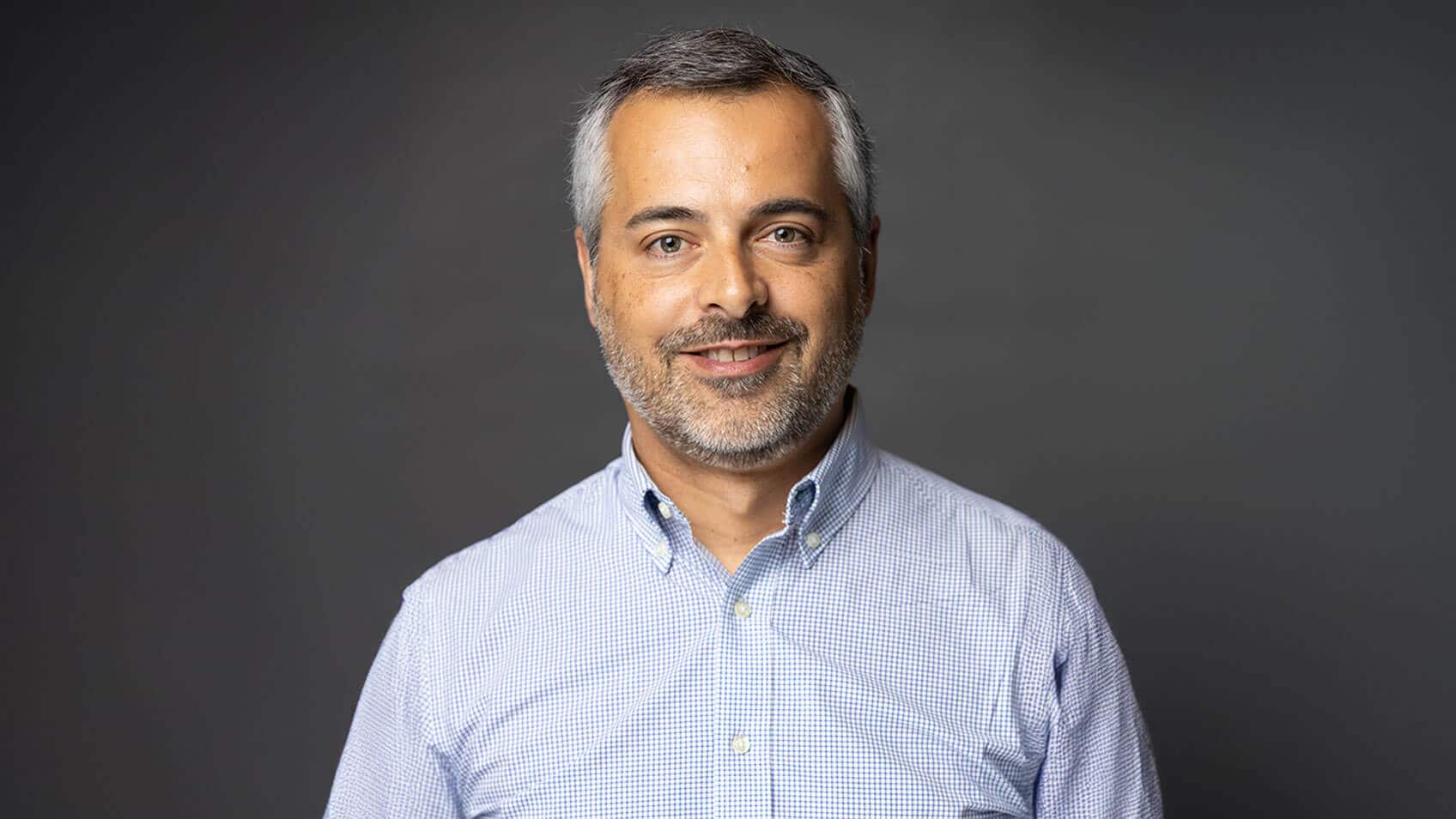
Tiago Da Costa Silva
Strategy & Planning Director, Digital Workplace Solutions, Lenovo
Tiago Da Costa Silva is an experienced well-rounded leader with 20+ years of experience delivering results in the technology and services realms. His areas of focus include strategy and planning, operations, business development, cyber-security, and digital workplace services/managed services. He has a proven track record of establishing new teams, partnerships, and business frameworks that deliver valuable outcomes to organizations, partners, and customers.

Right Here, Right Now: How Businesses are Overcoming Barriers to AI Adoption
Anil Nair, Head of Sales, US/Canada, Infrastructure Services, Lenovo & Lohit Lakshman, Digital Workplace Solutions General Manager, Lenovo

Navigating Sustainability in the AI Era
Find out how you can leverage AI and still meet your sustainability goals.

Embracing AI & ROI
Simplify your AI journey and accelerate business outcomes with Lenovo’s AI Services and TruScale.
Windows 11 Migration
New episodes in May
Provide more powerful experiences and consistency with better security for all.
Coming soon

AI PC
New episodes in June
Streamline and enhance everyday tasks with smarter AI that’s personalized for each user.

Hybrid AI – AMD
New episodes in July
Find the perfect balance of hardware, software, and services that’s built to fit your architecture.
Hybrid AI – NVIDIA
New episodes in August
Achieve greater productivity, privacy, and agility with tailored AI solutions.
Contact Us

Meet Your Host,
Alexa Carlin
Alexa Carlin is an in-demand public speaker, bestselling author, top content creator for women's empowerment, and the Founder of Women Empower X. Alexa has worked with Fortune Global 500 brands to create captivating and relatable content. She has been featured on the Oprah Winfrey Network, Cheddar TV, FOX, ABC, CBS, TEDx and in Entrepreneur, Glamour Magazine, and Forbes, among others.

